The living world has a sea now. Four new maps (Continents, Inner sea, Thousand isles, Coast and isles) put the nations on different lands, and everything that crosses the water goes by ship. Version française plus bas.
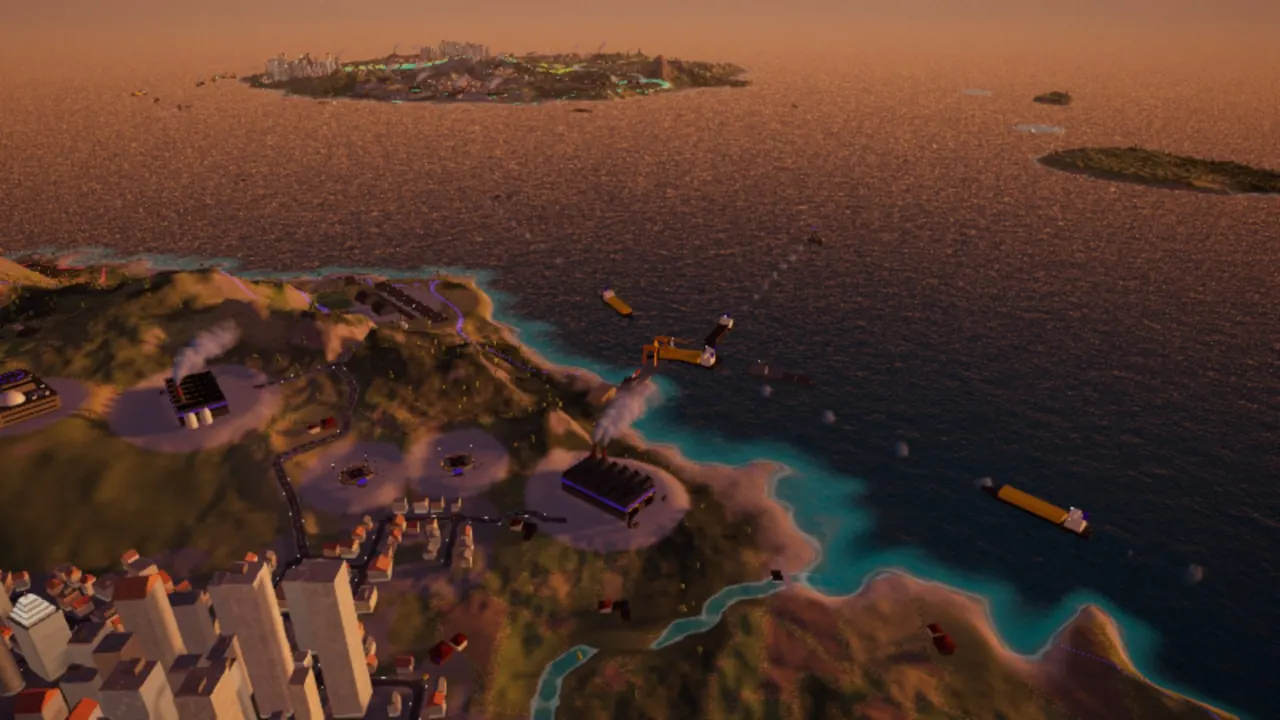
A port at dusk on the Thousand isles: cargo ships come and go, the town and its factories behind.
Un port au crépuscule sur les Mille îles : les cargos vont et viennent, la ville et ses usines derrière.
Ports and ships
- Nations build a port once something lies beyond the sea for them: a land of their own, a trading partner they do not touch by land, a field at sea, a land to settle, a war.
- Quays, warehouses, cranes, containers and a lighthouse; cargo ships, liners and troop transports with their wakes and night lights. Blasts sink ships and wreck ports.
Goods that really travel
- Each land keeps its own stock. A nation on several lands sends what one lacks from another that has some to spare, and nations that share no land trade port to port.
- Goods go through every stage: a lorry to the port, the port's warehouse, the ship, the other port's warehouse, a lorry to the towns. The nation card shows what waits in its warehouses.
- If the destination port or land is lost on the way, the ship turns for another port of the nation, or comes home: goods are never delivered to a land the nation has lost. A burnt warehouse loses its goods, a captured port hands them to the captor, a sunk cargo takes them down with it.
- Ships keep to the calendar at any speed: no more cargo arriving years late at x10.
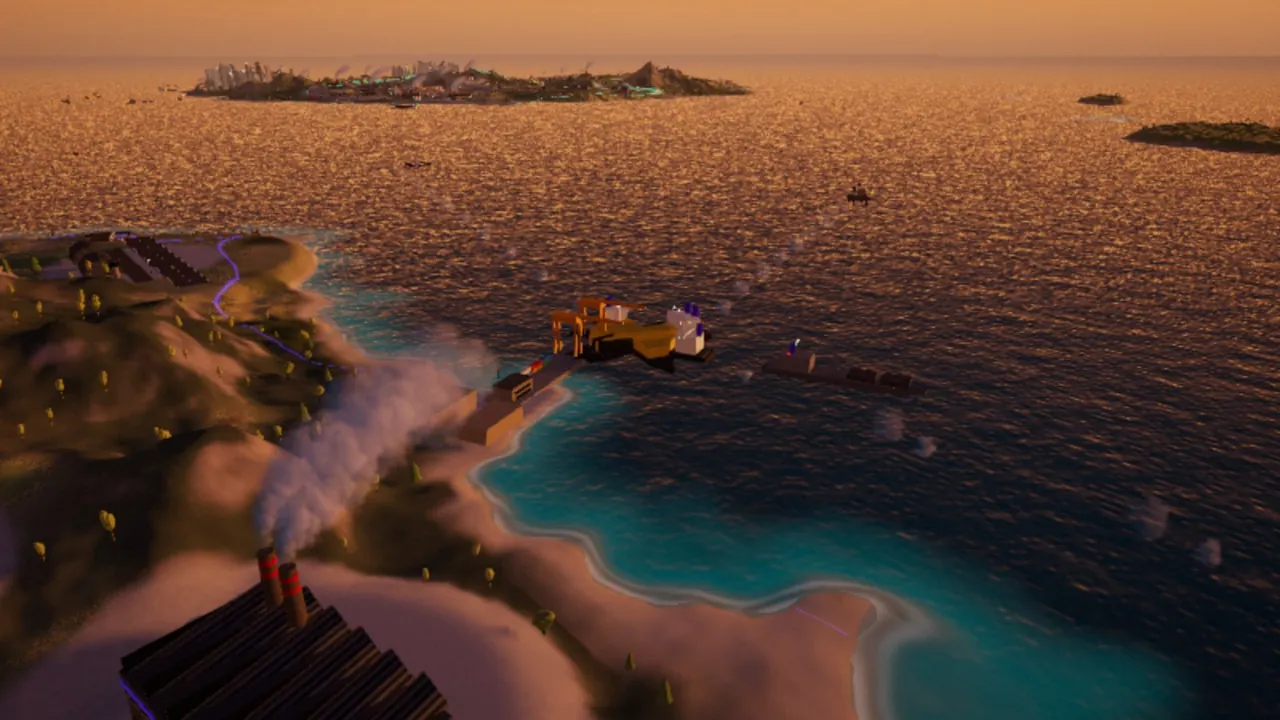
The quay: cranes, a warehouse, a cargo ship coming alongside. Goods wait here between the lorry and the ship.
Le quai : grues, entrepôt, un cargo qui accoste. Les marchandises attendent ici entre le camion et le navire.
Offshore
- Oil fields and fishing waters off the coasts: oil platforms and fish farms, their output brought to port by ship. In War mode, platforms are in the build menu.
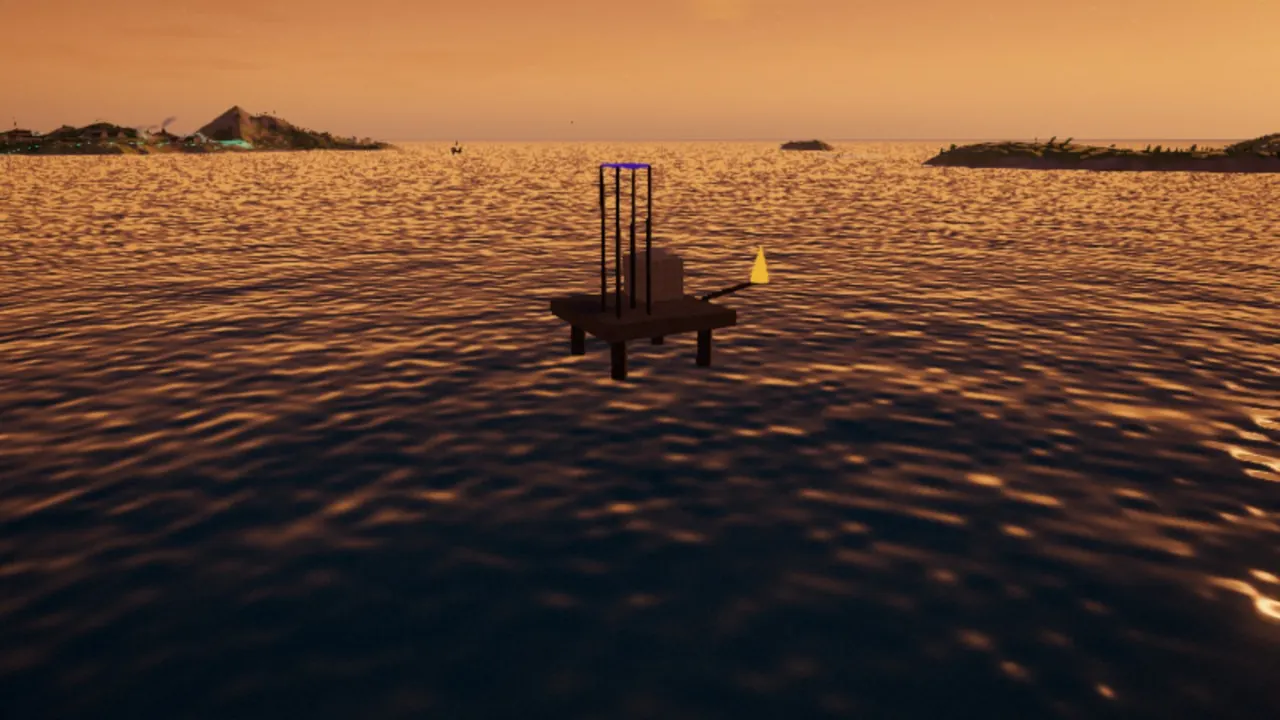
An oil platform at sea, its flare burning; tankers take its oil to the nearest port.
Une plateforme pétrolière en mer, sa torchère allumée ; des pétroliers portent son pétrole au port le plus proche.
Colonies and wars overseas
- A crowded nation sends a colonists' ship to a land no nation holds; the colony is born behind the beach, with its port and first stores. Migrants settle the islands.
- In Duel and War mode, tanks drive to the port, queue behind the quay, board, cross and land on an enemy beach from barges. In the living world, waves embark, land on the beach nearest their objective and push inland, while defenders hold their beaches.
- A colony with no port gets no relief by sea: it asks for a port (the nation builds or raises one if it can pay for it), and a bomber can drop a battalion on it.
Razed towns
- A town wiped out (nine tenths of it in ruins, almost nobody left) is razed: ruins with no nation, "Ruins of X" on the map. At least ten years later, once the land has healed, whoever holds the ground round it, a neighbouring town or colonists raise it again.
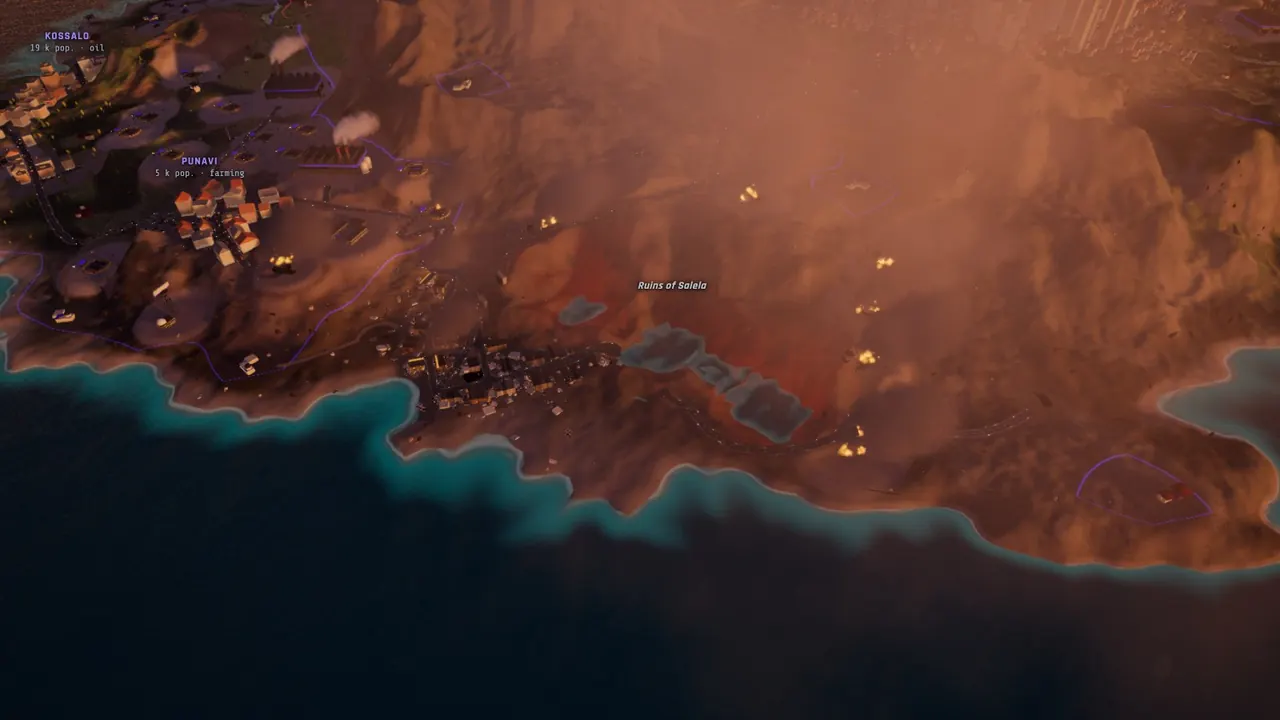
Salela after the bombs: razed, nobody's ruins until the land heals; the next town still stands.
Salela après les bombes : rasée, des ruines sans nation jusqu'à ce que la terre guérisse ; la ville voisine tient encore.
150 years of borders
From the tuning bench: who holds the land every 25 years, on three maps, with the game's settings and three variants tried against them.
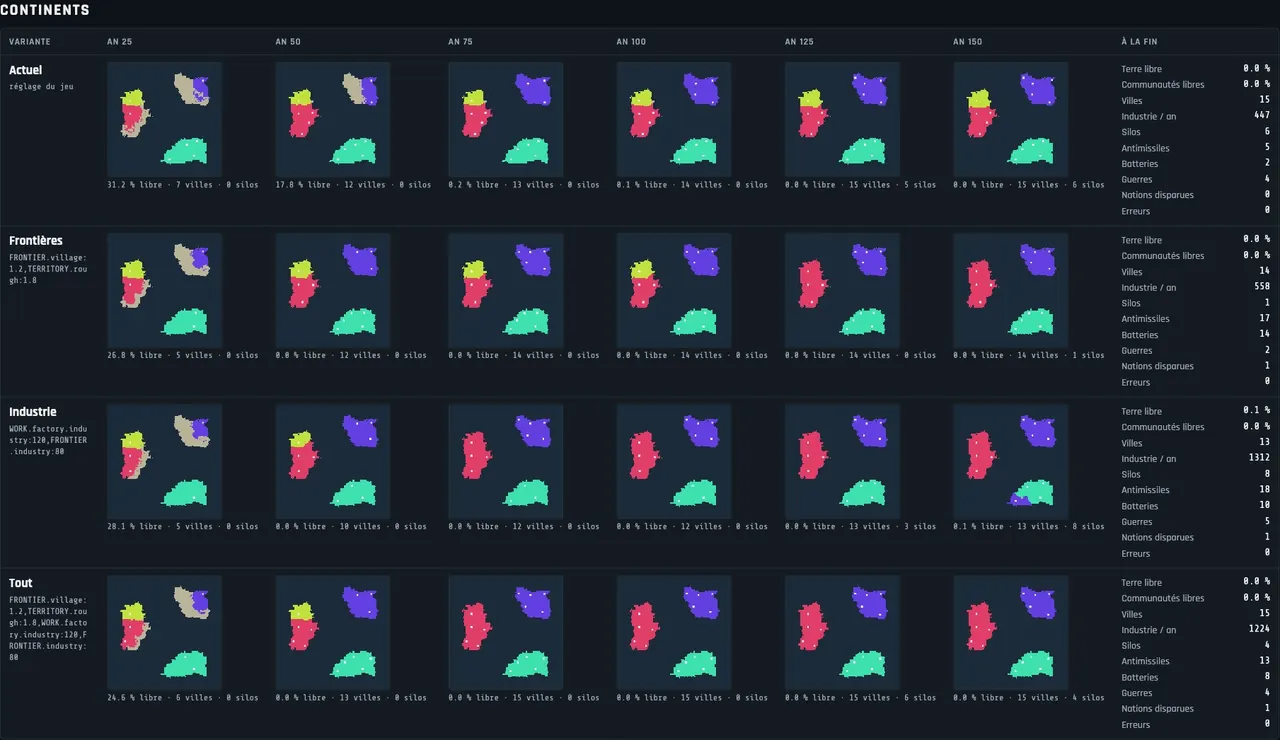
Continents: four nations, two of them sharing a land; in three of the variants one is gone by year 125.
Continents : quatre nations, dont deux sur la même terre ; dans trois des variantes, l'une a disparu en l'an 125.
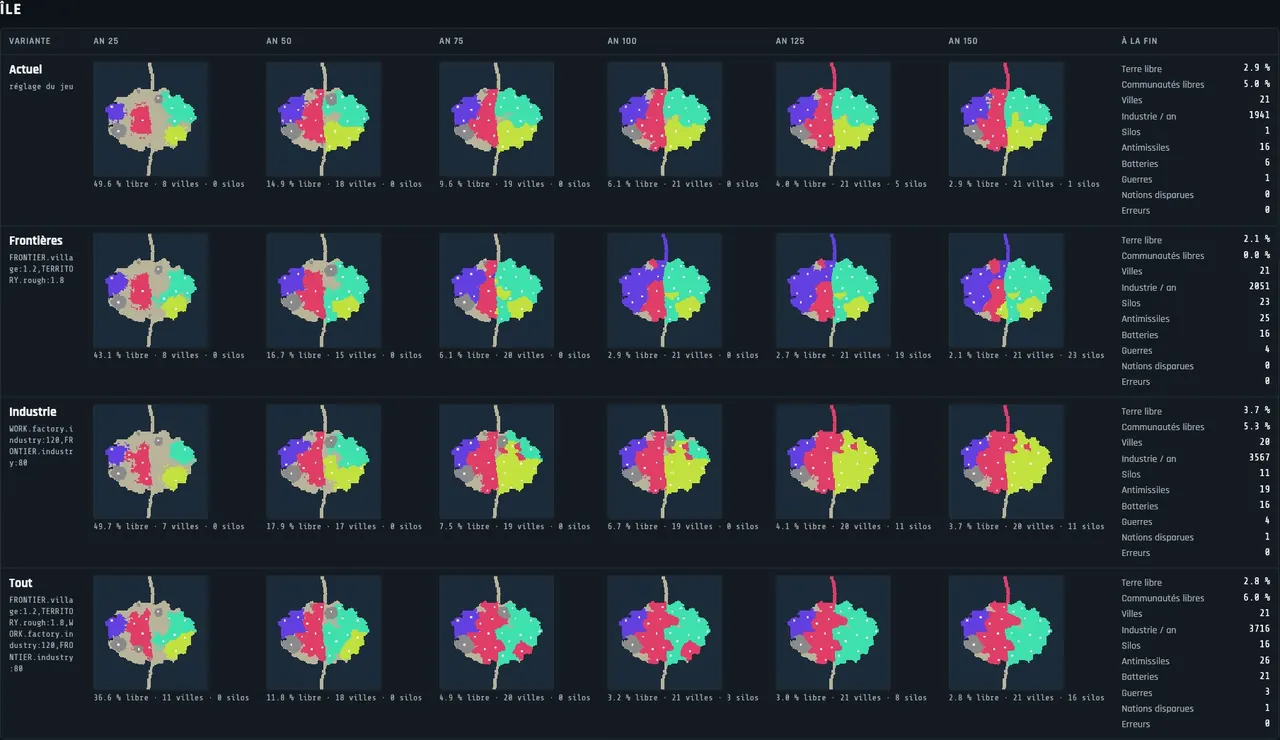
Island: the wild land filled within 50 years, then borders that move with the wars.
Île : la terre sauvage remplie en 50 ans, puis des frontières qui bougent avec les guerres.
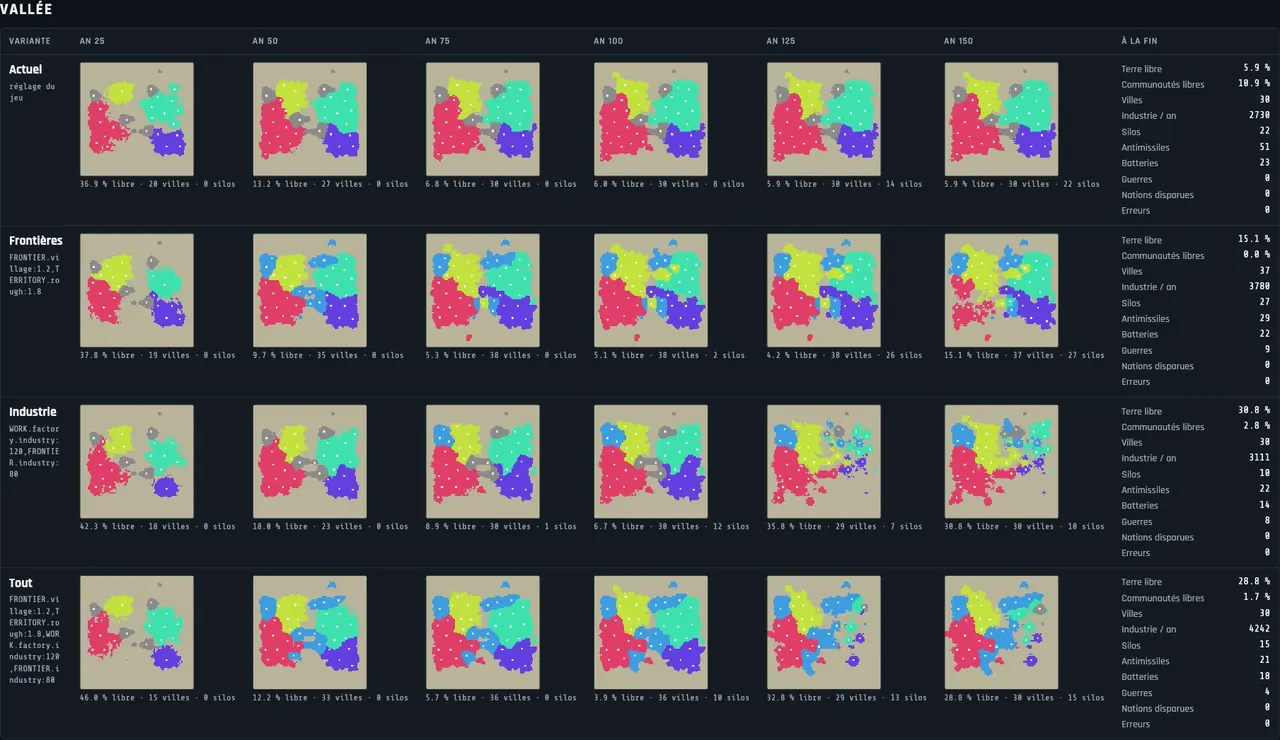
Valley: in two of the variants, the wars after year 100 leave the land empty again.
Vallée : dans deux des variantes, les guerres après l'an 100 revident la terre.
Version française
Le Monde vivant a maintenant une mer. Quatre nouvelles cartes (Continents, Mer intérieure, Mille îles, Côtes et îles) placent les nations sur des terres différentes, et tout ce qui traverse l'eau passe par bateau.
Ports et navires
- Une nation bâtit un port dès que quelque chose l'attend outre-mer : une terre à elle, un partenaire qu'elle ne touche pas par la terre, un gisement en mer, une terre à coloniser, une guerre.
- Quais, entrepôts, grues, conteneurs et phare ; cargos, paquebots et transports de troupes avec leurs sillages et leurs feux de nuit. Les explosions coulent les navires et détruisent les ports.
Des marchandises qui voyagent vraiment
- Chaque terre a son propre stock. Une nation sur plusieurs terres envoie à l'une ce qui lui manque depuis une autre qui en a de trop, et les nations qui ne se touchent pas commercent de port à port.
- Les marchandises passent par toutes les étapes : camion jusqu'au port, entrepôt du port, navire, entrepôt du port d'arrivée, camion jusqu'aux villes. La fiche de nation montre ce qui attend dans ses entrepôts.
- Si le port ou la terre de destination est perdu en route, le navire vire vers un autre port de la nation, ou rentre : rien n'est jamais livré sur une terre perdue. Un entrepôt incendié perd ses marchandises, un port pris les donne au vainqueur, un cargo coulé les emporte.
- Les navires suivent le calendrier à toute vitesse : plus de cargo qui arrive des années en retard en x10.
En mer
- Gisements de pétrole et eaux poissonneuses au large : plateformes pétrolières et fermes aquacoles, leur production ramenée au port par navire. En mode Guerre, les plateformes sont au menu de construction.
Colonies et guerres outre-mer
- Une nation à l'étroit envoie un navire de colons vers une terre qu'aucune nation ne tient ; la colonie naît derrière la plage, avec son port et ses premières réserves. Des migrants peuplent les îles.
- En Duel et en mode Guerre, les chars vont au port, attendent derrière le quai, embarquent, traversent et débarquent sur une plage ennemie par barges. Dans le Monde vivant, les vagues embarquent, débarquent sur la plage la plus proche de leur objectif et poussent vers l'intérieur, et les défenseurs tiennent leurs plages.
- Une colonie sans port ne reçoit plus de renforts par la mer : elle demande un port (la nation le bâtit ou le relève si elle peut le payer), et un bombardier peut y parachuter un bataillon.
Villes rasées
- Une ville anéantie (neuf dixièmes en ruines, presque plus personne) est rasée : des ruines sans nation, « Ruines de X » sur la carte. Dix ans au moins après, une fois la terre guérie, qui tient le terrain autour, une ville voisine ou des colons la relèvent.
150 ans de frontières
Les images du banc de réglage : qui tient la terre tous les 25 ans, sur trois cartes, avec le réglage du jeu et trois variantes essayées contre lui.